
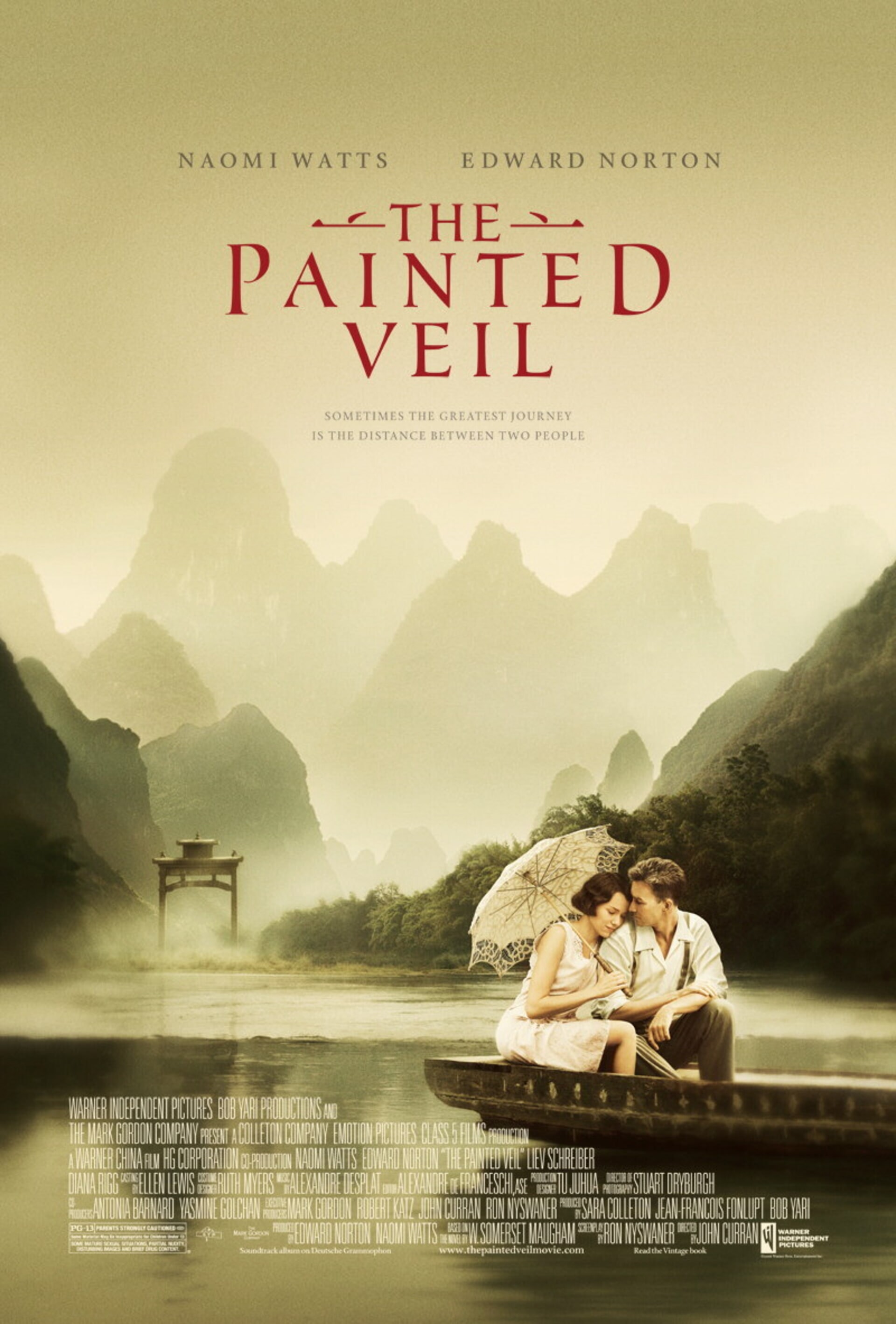
Have you ever wondered what it truly means to forgive? To find redemption in the face of betrayal? "The Painted Veil" (2006), set against the breathtaking backdrop of 1920s China, explores these complex themes through a tumultuous marriage tested by infidelity, disease, and ultimately, unexpected grace. It's a story of personal transformation that resonates even today.
Plot and Theme:
"The Painted Veil" centers on Kitty Garstin (Naomi Watts), a shallow socialite in London who, desperate to escape her mother's nagging and societal pressures, impulsively marries Walter Fane (Edward Norton), a bacteriologist working for the British government. Their marriage is one of convenience, lacking genuine love or understanding. Walter takes Kitty with him to Shanghai and then to a remote village in China ravaged by a cholera epidemic. Unhappy and bored, Kitty embarks on an affair with the charming Charles Townsend (Liev Schreiber), a married British diplomat. When Walter discovers Kitty’s infidelity, he forces her to choose: divorce him, which would ruin her reputation, or accompany him to a disease-stricken village in the Chinese countryside, where he is working to combat the epidemic. She chooses the latter, a decision that will profoundly change both of their lives.
Amidst the squalor and suffering, Kitty begins to mature, finding purpose in helping the nuns at the local orphanage care for the sick and dying. Walter, consumed by his work and initially driven by revenge, slowly begins to see Kitty in a new light, recognizing her resilience and burgeoning compassion. The film is a journey of self-discovery for both of them, exploring themes of love, forgiveness, and the redemptive power of sacrifice. The stark contrast between Kitty’s initial frivolousness and her eventual selfless acts makes her transformation particularly compelling.
The themes of societal expectations, marital discord, and finding meaning in life are highly relatable to adults. Teenagers might find the exploration of love, betrayal, and personal growth particularly engaging, especially Kitty's struggle to find her own identity. While there isn't a heavy-handed moral message, the film certainly offers a powerful commentary on the consequences of selfishness and the importance of empathy and compassion. It subtly critiques the colonial mindset of the time and highlights the resilience and humanity of the Chinese people.
Characters & Acting:
Naomi Watts delivers a nuanced and captivating performance as Kitty. She perfectly captures Kitty's initial shallowness and vanity, as well as her gradual transformation into a more compassionate and empathetic woman. Her emotional journey is both believable and deeply affecting. Edward Norton is equally brilliant as Walter. He portrays Walter's stoicism, intelligence, and repressed emotions with remarkable subtlety. You can feel his inner turmoil and the simmering anger that fuels his actions. The chemistry between Watts and Norton is palpable, evolving from cold detachment and resentment to a tentative understanding and a flicker of something resembling love.
Liev Schreiber, as Charles Townsend, embodies the charming but ultimately selfish and cowardly lover. His portrayal is understated but effective, highlighting the superficiality of Kitty's infatuation. The supporting cast, particularly the Chinese actors, add authenticity and depth to the film. The children in the orphanage are particularly endearing, providing moments of levity amidst the grim reality of the epidemic. Both teen and adult viewers will find the performances compelling and engaging, drawing them into the characters' emotional struggles. The complex relationship dynamics, particularly between Kitty and Walter, provide ample fodder for discussion and reflection.
Visual Style and Direction:
The cinematography in "The Painted Veil" is absolutely stunning. The film beautifully captures the landscapes of China, from the bustling streets of Shanghai to the serene beauty of the rural countryside. The visuals are rich in detail, creating a vivid and immersive experience for the viewer. The film has a realistic tone, eschewing overly dramatic or stylized visuals. The scenes in the cholera-stricken village are particularly stark and unflinching, conveying the harsh reality of the epidemic.
The direction, by John Curran, is masterful. He allows the story to unfold at a deliberate pace, giving the audience time to absorb the emotional nuances of the characters' relationships and the beauty and devastation of the Chinese landscape. The film avoids melodrama, instead opting for a more understated and realistic approach. The lighting and color palette effectively convey the emotional tone of each scene, shifting from the bright and opulent interiors of Shanghai to the muted and somber tones of the cholera-stricken village. The film's visual aesthetic is undoubtedly appealing to the visual generation, offering a feast for the eyes while simultaneously serving the narrative.
Soundtrack & Music:
The soundtrack, composed by Alexandre Desplat, is a haunting and beautiful score that perfectly complements the film's emotional tone. The music is primarily orchestral, with a delicate and melancholic feel. It underscores the characters' inner turmoil and the beauty and sadness of the Chinese landscape. There aren't any trending songs that would specifically resonate with younger audiences, but the classical score is timeless and emotionally powerful. The music never overpowers the story but rather enhances the emotional impact of each scene. It's a soundtrack that lingers in the memory long after the film has ended.
Audience Suitability:
The film's themes of love, betrayal, and personal growth are relevant to both teens and adults, although they may be interpreted differently. Teenagers might focus on the romantic aspects of the story and Kitty's struggle to find her identity, while adults may be more attuned to the complexities of marriage, forgiveness, and the search for meaning in life. The film contains mature themes, including infidelity and death, which may be more suitable for older teens and adults. Some of the scenes depicting the cholera epidemic are graphic and disturbing, which may be upsetting to younger viewers.
Teenagers might be drawn to Kitty's initial naiveté and her journey of self-discovery, seeing her as a relatable figure who is struggling to find her place in the world. Adults, on the other hand, might appreciate the film's nuanced portrayal of marriage and the challenges of communication and forgiveness. The different age groups may also interpret the film's message differently, with teens perhaps focusing on the importance of following one's heart and adults appreciating the complexities of moral choices and the redemptive power of compassion.
Strengths & Weaknesses:
The film's main strengths lie in its compelling story, strong performances, stunning visuals, and haunting soundtrack. The complex characters and their emotional journeys are deeply engaging, drawing the viewer into their world. The film's depiction of 1920s China is both beautiful and authentic, adding depth and richness to the narrative.
One minor weakness is that the film's pacing can feel slow at times. Some viewers may find the deliberate pace to be frustrating, particularly in the first act. Additionally, the character of Charles Townsend could have been developed further, making his motivations and actions more understandable. However, these weaknesses are minor and do not detract significantly from the overall quality of the film.
Conclusion & Recommendation:
"The Painted Veil" is a beautifully crafted and emotionally resonant film that explores complex themes of love, forgiveness, and redemption. The strong performances, stunning visuals, and haunting soundtrack make it a truly memorable cinematic experience. While it may be a bit slow-paced for some, the film's emotional depth and compelling story are well worth the investment.
This film is best suited for streaming, allowing viewers to fully immerse themselves in the story at their own pace. I would recommend it to adults who enjoy dramas with complex characters and thought-provoking themes. Older teens who appreciate character-driven stories and are interested in exploring mature themes will also find it engaging.
Rating: 8.5/10
Ready to embark on this emotional journey? Watch movies for free here : https://21.expertways.biz.id/


